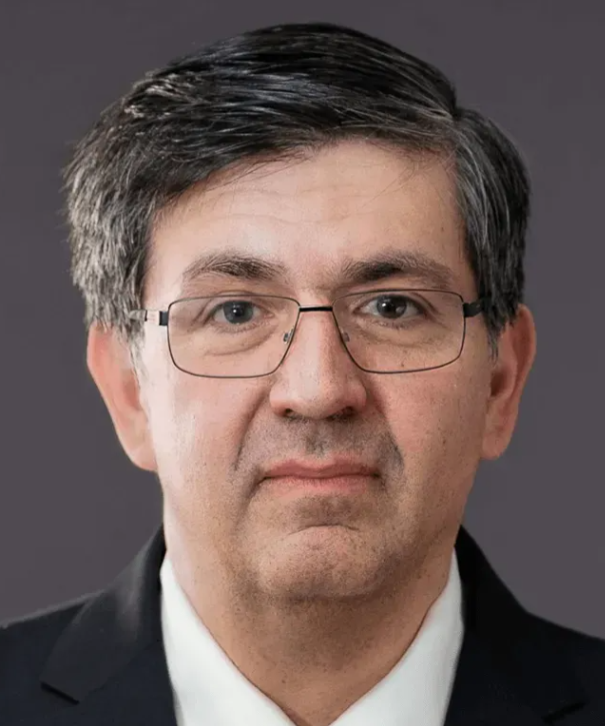
Carlos A. Coello Coello 🏛︎︎CINVESTAV-IPN, Mexico Professor with distinction (Investigador CINVESTAV 3F) | Visiting Professor, Basque Center for Applied Mathematics, Spain Prof. Dr. Carlos Coello is a professor with distinction (Investigador CINVESTAV 3F) at the Center for Research and Advanced Studies of the Instituto Politécnico Nacional (CINVESTAV-IPN) in Mexico City and visiting professor at the Basque Center for Applied Mathematics in Spain. Has taught master’s and Ph.D. level courses on evolutionary computation, evolutionary multiobjective optimization, programming languages, and engineering optimization at CINVESTAV-IPN. In addition, he has taught short courses in Spain, England, India, U.S., among others. His research interests are evolutionary computation (genetic algorithms and evolution strategies), as well as engineering optimization. His main contributions have been the design of biologically inspired stochastic algorithms to solve highly complex multi-objective optimization problems (mainly non-linear). He has made pioneering contributions to this area, which is now known as evolutionary multi-objective optimization. For example, he proposed, along with his research group, the first genetic micro-algorithm for multi-objective optimization, which has been used in real-world applications in several countries, like the United States, for the design of supersonic business jets. He is member of the Foundation Advisory Board of the International AIQT Foundation, which strives to establish a highly competitive (international-level) research center in artificial intelligence and quantum technology. Among his multiple special recognitions and awards, Dr. Carlos Coello was awarded by the International Society on Multi-Criteria Decision Making (MCDM) the 2024 MCDM Edgeworth-Pareto Award. In 2023, he won the Premio Crónica in Science and Technology and was selected by Líderes magazine as part of their "300 most influential leaders in Mexico" list, taking the 69th position. He also won the SIGEVO Outstanding Contribution Award (2023) given by the Association for Computing Machinery (ACM), the IEEE Computational Intelligence Society Evolutionary Computation Pioneer Award (2021), among many others. Dr. Coello is level 3 in the National System of Researchers (SNII) in Mexico and was also ranked #289 in the world and #1 in Mexico in the 8th Edition of the Guide2Research 2022 Ranking of Top 1000 Scientists in the field of Computer Science and Electronics. Professor Carlos Coello joined Tecnológico de Monterrey as Distinguished Visiting Professor in Computer Science and Computational Intelligence for the School of Engineering and Sciences. |
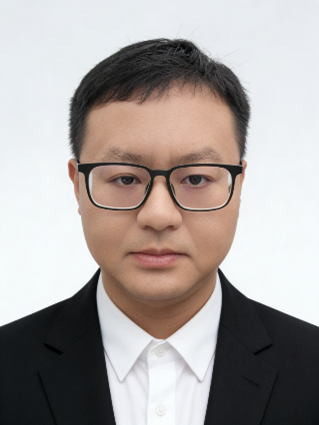
Feiwei Qin 🏛︎︎Hangzhou Dianzi University, China Professor and Ph.D. Supervisor, School of Computer Science Prof. Feiwei Qin is a Professor and Ph.D. Supervisor at the School of Computer Science, Hangzhou Dianzi University. Selected for the Qianjiang Distinguished Young Scholars Program of the university in 2023 and the Zhejiang Provincial Young Talent Program in 2024. Research interests include artificial intelligence, CAD, and computer vision. More than 100 academic papers have been published in related fields, including highly cited papers, SCI Q1 journals (Chinese Academy of Sciences classification), top-tier venues, and CCF-A conferences/journals. Over 60 invention patents have been filed, and the Second Prize of the China Invention Association has been awarded. A total of 4 national-level projects and 7 provincial-level projects have been led or completed, with participation as a key member in 10 national-level and 9 provincial-level projects. Over the past five years, teaching performance evaluations have consistently been rated A. Supervision has resulted in 16 national-level undergraduate innovation and entrepreneurship projects and 12 Zhejiang “Xinmiao” projects. Students have received more than 80 international and national awards in competitions such as the China International College Students’ Innovation Competition, “Challenge Cup,” “Lanqiao Cup,” the China Collegiate Computer Design Competition, Intelligent Robotics Competition, and international medical image analysis challenges. Speech Title: Intelligent Generation of 3D CAD Models Abstract: This report explores two major technical paradigms for intelligent CAD model generation. The first paradigm is direct B-rep generation. To address the limitations of existing methods in underutilizing graph structures and the difficulty of balancing generation efficiency with topological validity, a graph diffusion-based direct B-rep generation method, BRep-GD, is proposed. Furthermore, to mitigate issues such as error accumulation, redundancy, and noise contamination caused by multi-stage cascaded approaches, a high-fidelity latent representation-based direct B-rep generation method, HiFi-BRep, is introduced. The second paradigm is sequential modeling. The Drawing2CAD framework is developed to enable cross-modal generation from 2D vector engineering drawings to parametric CAD models. By adopting a dual-decoder Transformer architecture, CAD generation is reformulated as a sequence-to-sequence learning problem. Each paradigm has distinct advantages: direct B-rep generation is more suitable for modeling complex geometric and topological relationships, while sequential modeling aligns more closely with traditional CAD design workflows and offers better interpretability. Through comparative analysis of their technical characteristics and application scenarios, future CAD generation technologies are expected to evolve toward multimodal integration and hybrid modeling, combining the strengths of both paradigms to achieve more intelligent and efficient CAD model generation. |
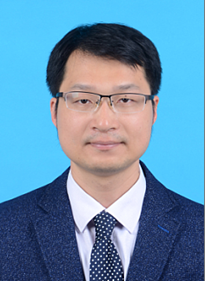
Gexiang Zhang 🏛︎︎Chengdu University of Information Technology, China Full Professor and PhD Supervisor; Dean, School of Automation; Director, Institute of Autonomous Intelligent Technology and Systems Prof. Full Professor and PhD Supervisor at Chengdu University of Information Technology; Dean of the School of Automation; Director of the Institute of Autonomous Intelligent Technology and Systems. He is a recipient of the Special Government Allowance from the State Council, Foreign Academician of the Russian Academy of Natural Sciences, and Chair of the International Society of Membrane Computing. He has been successively listed in Elsevier’s Most Cited Chinese Researchers and the Top 2% Scientists Worldwide for many years. He is a Leading Talent in Scientific and Technological Innovation under Sichuan Tianfu Qingcheng Program, Academic and Technical Leader of Sichuan Province, IET Fellow, Winner of the Program for New Century Excellent Talents in University of the Ministry of Education, and Recipient of the Training Fund for Outstanding Young Academic Leaders of Sichuan Province. In 2019, he was awarded the Grigore Moisil Prize by the Romanian Academy (As specially reported on the official website of the Ministry of Science and Technology of China, he is the first Chinese scholar to receive the Romanian Academy Award as the first author, and also the first Chinese recipient of the Grigore Moisil Prize). His research interests mainly cover artificial intelligence, intelligent robotics, and intelligent control. He has presided over 5 National Natural Science Foundation projects and dozens of provincial/ministerial and enterprise-commissioned projects. He has published 4 English monographs and 1 Chinese monograph, as well as more than 300 high-level academic papers. He holds 2 authorized US invention patents and over 60 authorized Chinese invention patents. His research achievements have won numerous awards, including the First Prize of Xizang Autonomous Region Science and Technology Award, Science and Technology Achievement Promotion Award of Guangdong Provincial Science and Technology Award, Second Prize of Sichuan Provincial Natural Science Award, First Prize and Outstanding Contribution Award of Scientific and Technological Innovation from China Council for the Promotion of Science and Technology Industrialization, and Second & Third Prizes of Sichuan Provincial Science and Technology Progress Award. He serves as Executive Editor-in-Chief of the international journal Journal of Membrane Computing (JMC), and Editorial Board Member of international journals including Pattern Recognition Letters (PPL), International Journal of Parallel, Emergent and Distributed Systems (IJPEDS), Axioms and SN Computer Science. He has also acted as Chair, Organizing Committee Chair, Program Committee Chair/Co-Chair or Committee Member for dozens of international conferences. Speech Title: Brain-Inspired Computing Models: Spiking Neural P Systems Networks Abstract: This talk focuses on the introduction of a little-known spiking neural P system network that can be used to construct brain-inspired computing models. Starting from the basic concepts of brain-inspired computing as well as relevant brain-inspired computing models and algorithms, this talk will proceed to spiking neural P system networks and highlights the discussion on the current research progress regarding the construction of brain-inspired computing models with spiking neural P systems, as well as the key issues under investigation. |
Fenghua Huang 🏛︎︎Yango University, China Dean, School of Artificial Intelligence; Director, Institute of Intelligent Engineering Technology Prof. Prof. Huang Fenghua currently serves as Dean of the School of Artificial Intelligence and Director of the Institute of Intelligent Engineering Technology at Yango University. He has been awarded as Fujian Provincial High-Level Talent (Level B) and Fujian Outstanding Teacher, and also serves as the Person-in-Charge of the National First-Class Undergraduate Program Construction Site of Computer Science and Technology, Director of Fujian Key Laboratory of Spatial Information Perception and Intelligent Processing, and Director of Fujian University Engineering Research Center for Spatial Data Mining and Applications. He was a visiting scholar at the University of North Carolina, USA, a Fujian Provincial Science and Technology Commissioner (Team Initiator) for 2022-2024, and a Distinguished Scholar of Yango University. Additionally, he acts as Master’s Supervisor for two majors at Fuzhou University: Computer Technology and Geomatics Engineering. He is a Senior Member of IEEE, and a member of the China Electronics Institute and China Computer Federation. He concurrently holds the positions of Vice Chairman of Big Data Education Alliance (Fujian), and Adjunct Research Fellow of Suzhou Institute of Science and Technology, Monash University, Australia. He has been selected into a number of high-level talent programs, including the Fujian Provincial High-Level Talent Program (ABC Categories), Fujian Provincial Program for New Century Excellent Talents in Universities, Fujian Provincial Training Program for Outstanding Young Scientific Researchers in Universities, and the Overseas High-End Visiting Scholar Program for Outstanding Academic Leaders of Fujian Provincial Undergraduate Universities. He has served as General Chair for seven international academic conferences related to artificial intelligence, as well as Guest Editors and Peer Reviewers for multiple SCI-indexed international journals. His main research interests include data mining, machine learning, and remote sensing image processing. In the past five years, he has presided over more than 10 vertical research projects at national, provincial and municipal levels, and 12 horizontal research projects commissioned by enterprises. He has published over 50 high-level academic papers, obtained 20 authorized national patents and more than 10 software copyrights, and authored 5 academic monographs and textbooks. Speech Title: Deep Learning and Inversion of water quality parameters for reservoirs by UAV Remote Sensing Abstract: The keynote speech will mainly introduce the basic principles of deep learning, the mainstream technical frameworks (such as DBN, CNN, UNET, RNN, LSTM, transformer, etc.) and their application in the inversion of water quality parameters for reservoirs by UAV Remote Sensing, and explores the shortcomings, as well as the main challenges in the era of multimodal large-scale models and AI agents. |